


 Tiếng Việt
 Overview

Unlocking Capital Bottlenecks for the Energy-as-a-Service (EaaS) Model in Vietnam
Rooftop solar power has reached a significant scale in Vietnam. As of June 2025, the country had approximately 11.4 GWp of installed capacity across more than 103,000 systems. Alongside this growth, the Energy-as-a-Service (EaaS) model is emerging as an approach that enables businesses to adopt energy solutions without upfront capital investment. Under this model, the service provider invests in and operates the system, while customers pay based on energy output or savings achieved.
However, this value proposition also shifts the financing burden to EaaS providers. How can cash flows generated from energy service contracts be transformed into medium- and long-term financing?
This was the central theme presented by Mr. Nguyen Quang Thuan, FCCA, Executive Chairman of FiinGroup & FiinRatings, at the National Scientific Conference “The ‘Energy-as-a-Service’ (EaaS) Business Model in Vietnam’s Energy Sector in the Context of Achieving Net Zero Emissions by 2050,” organized by the National Economics University on September 18, 2026.
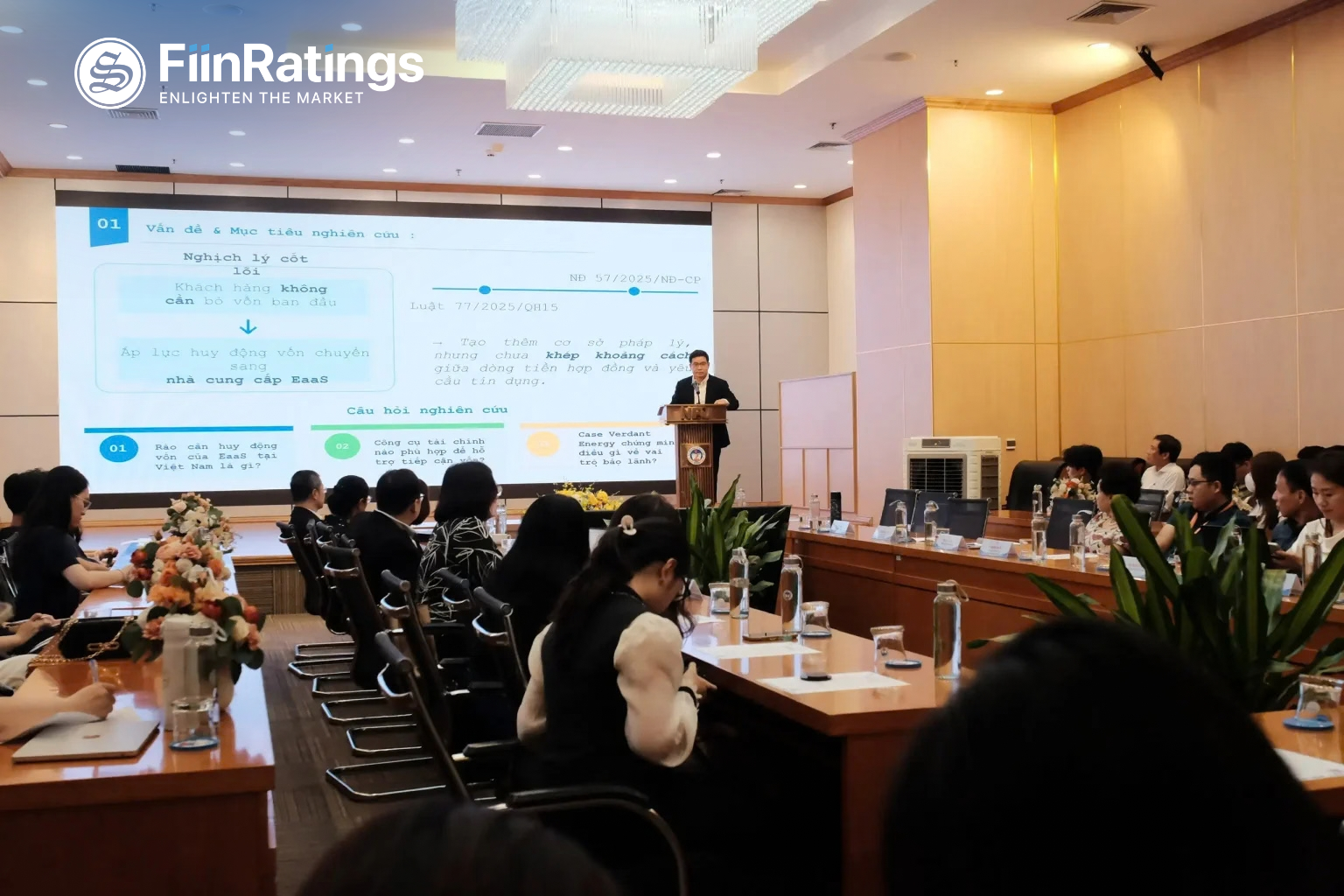
Mr. Nguyen Quang Thuan, Executive Chairman of FiinGroup and FiinRatings, speaking at the conference.
Significant Growth Potential, Yet Limited Access to Finance
EaaS adoption across industrial parks nationwide currently stands at only around 10–12%, across 433 industrial parks comprising approximately 14,900 enterprises. The Southeast leads with an adoption rate of 15–20%, while rates in the Northern and Central regions remain relatively low.
The growth potential is substantial, but demand remains fragmented across numerous small contracts. According to FiinRatings' research and analysis, three key barriers remain:
- Fragmented portfolios and small transaction sizes: Each contract is worth only several billion to several tens of billions of VND, making transaction, due diligence, and monitoring costs relatively high compared with loan size.
- Cash flows are not yet recognized as collateral: The value of EaaS lies in the right to receive payments under service contracts, an intangible asset that does not fit conventional lending requirements.
- Dual-layer risk: Financing providers must assess both system performance risk and the credit risk of end customers.
Law No. 77/2025/QH15 and Decree No. 57/2025/ND-CP on the Direct Power Purchase Agreement (DPPA) mechanism have provided an additional legal foundation, but the gap between contractual cash flows and credit requirements remains. The challenge, therefore, is not simply to expand the supply of capital, but also to develop financing solutions tailored to the specific characteristics of the EaaS model.
Diversifying Financing Solutions for the EaaS Model
Depending on their scale and stage of development, EaaS providers can access a range of financing solutions, from credit risk-sharing mechanisms, green credit, and financial leasing to portfolio financing, green/sustainability bonds, securitization, and blended finance.
The case of Verdant Energy demonstrates the role of transaction structures and credit enhancement mechanisms. Two entities, Verdant Vietnam Bravo and Verdant Vietnam Crystal, issued bonds totaling VND 390 billion, with coupon rates of approximately 6.95–6.96% per annum. While the issuers were rated 'BB+', the two bond issuances were assigned 'AAA' ratings by FiinRatings, supported by a full payment guarantee from GuarantCo.
The transaction demonstrates that small scale does not necessarily constrain access to long-term funding when cash flows are appropriately structured and supported by credit enhancement. At the same time, a Second-Party Opinion (SPO) played a key role in reinforcing the green integrity and transparency of the issuance.
From “Expanding the Supply of Capital” to “Improving Bankability”
Based on the research findings, Mr. Thuan proposed four key policy priorities:
- Strengthen the legal framework for energy service contracts and cash flows, including payment collection rights, contract assignment, and the legal recognition of property rights as financeable collateral;
- Develop guarantee and credit risk-sharing mechanisms suited to the characteristics of EaaS portfolios;
- Develop portfolio-based financing, accompanied by the standardization of contracts, customer data, and measurement and verification (M&V) protocols;
- Expand medium- and long-term funding sources through green credit, financial leasing, green bonds, and blended finance, reducing reliance on equity and high-cost private credit.
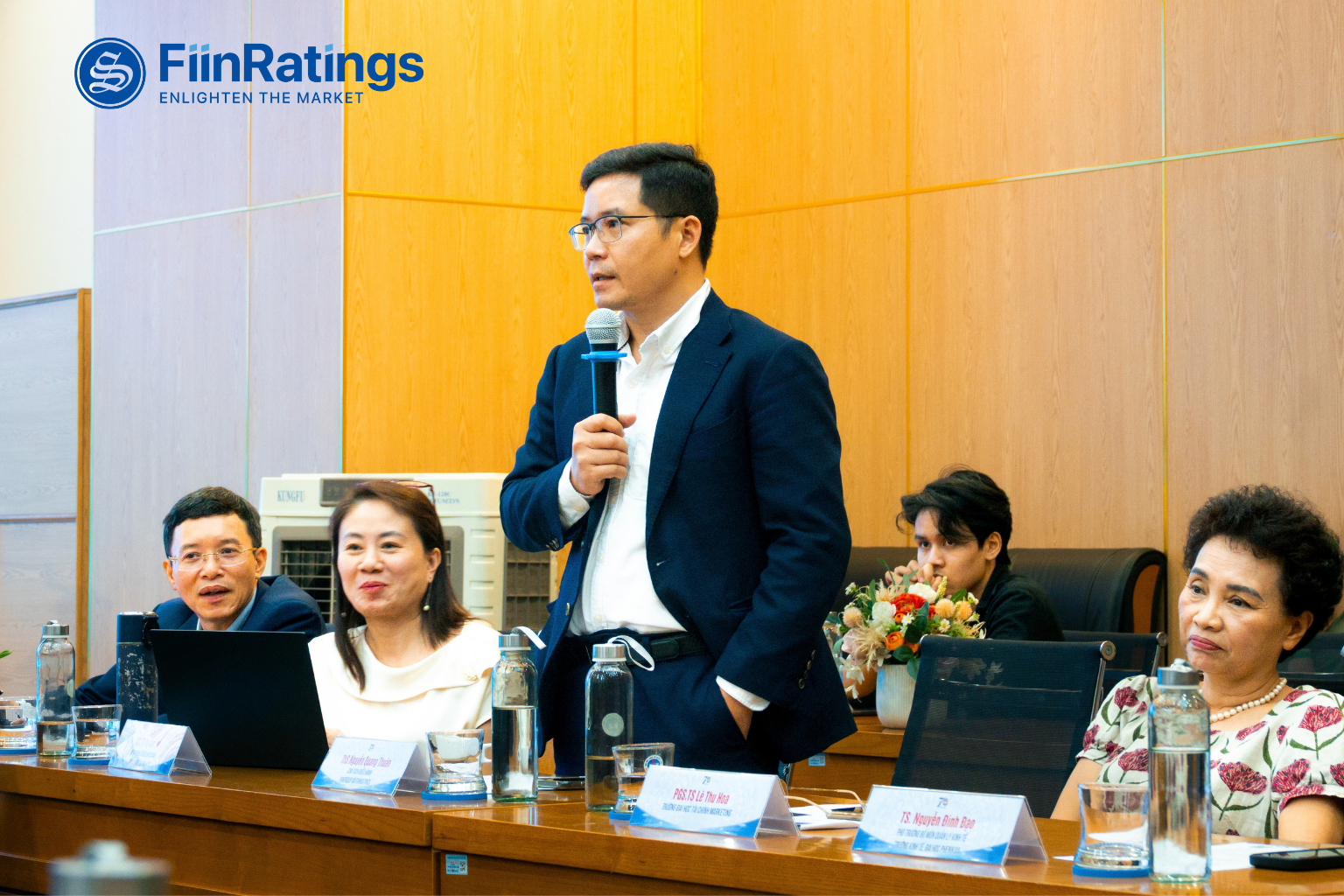
“Energy service cash flows need to be appropriately structured and supported by credit enhancement, while financial policies for EaaS should be developed to improve the bankability of these cash flows,” Mr. Thuan emphasized.
As the EaaS model continues to expand, these pillars will provide important foundations for EaaS providers, including small and medium-sized enterprises, to access long-term financing at appropriate costs.
With the expertise in credit ratings and independent sustainable finance assessments, FiinRatings is committed to supporting businesses in standardizing credit information and optimizing transaction structures, thereby contributing to Vietnam’s energy transition and its goal of achieving Net Zero 2050 target.
👉 Read FiinRatings' detailed analysis of financing solutions for the EaaS model: HERE
-----------------
Connect with FiinRatings experts to learn more about credit ratings and sustainable finance services:
 Email: support@fiinratings.vn
 Tel: (84-24) 3562 6962


