


 Tiếng Việt
 Overview

Green Bonds: Costs, Benefits and Role in the Future of Vietnam
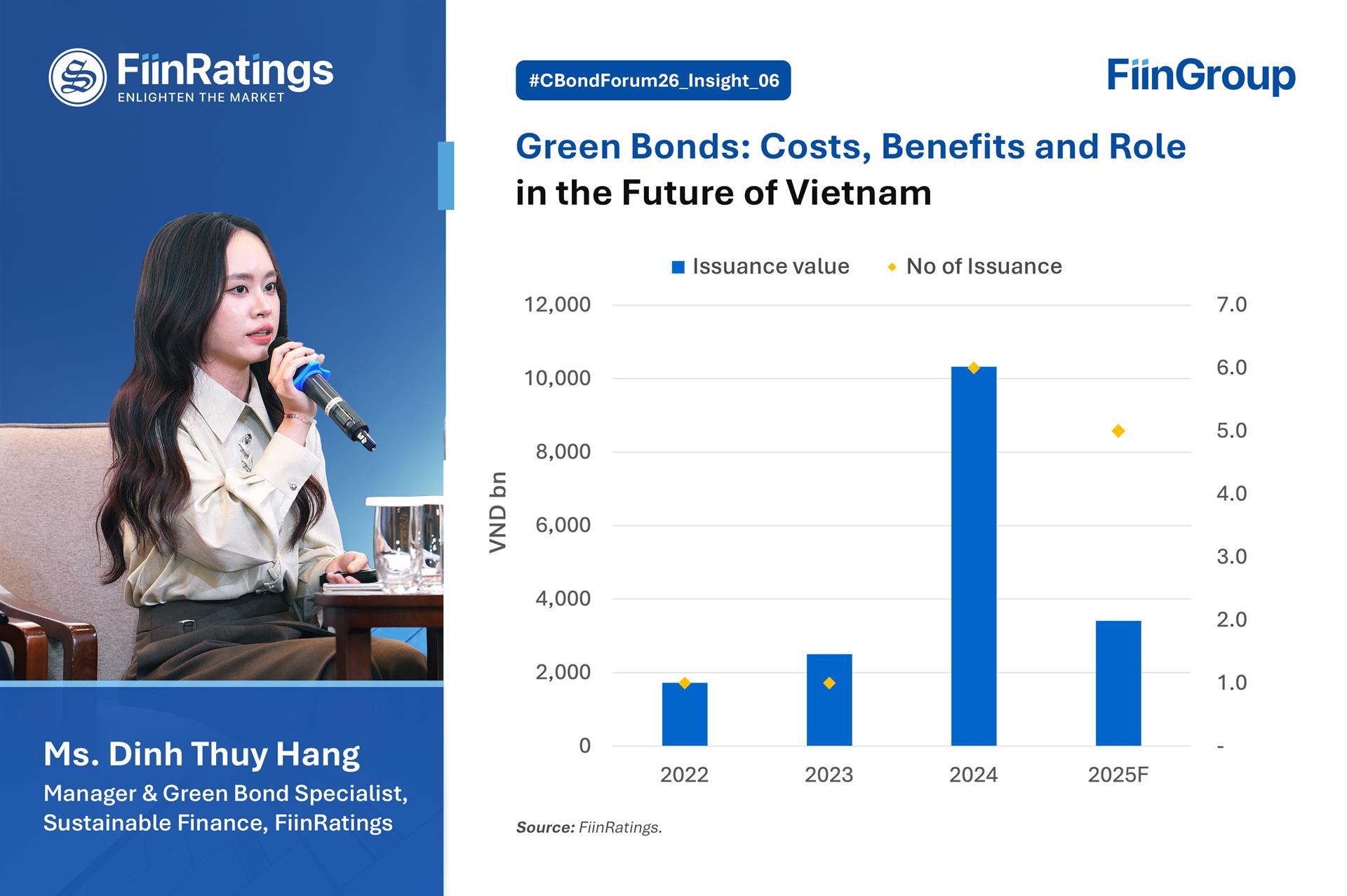
Vietnam is entering a pivotal phase of its green transition, shaped by its Net Zero 2050 commitment and its Nationally Determined Contribution (NDC 3.0). However, realizing these ambitious targets will require an enormous volume of financing—far exceeding the capacity of traditional funding channels.
Against this backdrop, green bonds and other GSS (Green, Social and Sustainability) instruments are emerging as a critical channel for mobilizing capital from the private sector. The key question, however, is whether Vietnam’s market is ready to seize this opportunity.
Market Commentary No. 06 from the Vietnam Corporate Bond Market Forum 2026 provides an in-depth analysis of green bond market developments, from regional dynamics to Vietnam’s domestic landscape, while highlighting the key conditions issuers must meet to effectively access long-term capital.
Key highlights:
🔹 The regional GSS market is diverging—Vietnam must position itself early to avoid being left behind: While Japan, South Korea, and China account for three-quarters of total GSS issuance in Asia-Pacific, Southeast Asian markets, including Vietna, remain in the foundation-building stage. Under increasing pressure from national Net Zero commitments and rising transparency requirements, issuers that proactively build capabilities and credibility early will hold a significant advantage in accessing long-term ESG capital.
🔹 Vietnam’s green bond market is accelerating with substantial room to grow: Total issuance reached a record high of approximately VND 10,325 billion in 2024, with diversification into sectors such as water infrastructure, recycling industries, and banking. However, green bonds still account for less than 2.2% of total market outstanding value, indicating considerable growth potential.
🔹 The tangible benefits of green bonds extend well beyond brand value: Longer tenors (up to 20 years), competitive interest rates, and access to an international investor base are quantifiable advantages for issuers. In the context of Vietnam’s estimated USD 670–700 billion financing needs for its green transition, green bonds are increasingly becoming a strategic source of capital.
🔹 Capability and process readiness are prerequisites for successful issuance: Green bond issuance requires issuers to establish an independently reviewed green finance framework, robust environmental risk management systems, and internal ESG capabilities, along with periodic post-issuance impact reporting. These elements also form the foundation for the market to expand toward new sustainable finance instruments linked to KPIs and Sustainability Performance Targets (SPTs), meeting the increasingly diverse financing needs across economic sectors.
The report is based on a panel discussion featuring Mr. Erik Christianto, Director, Product Solutions, S&P Global Ratings; Ms. Dinh Thuy Hang, Manager & Green Bond Specialist, Sustainable Finance, FiinRatings; and Ms. Dao Yen Nhung, Senior Analyst, Sustainable Finance Services, FiinRatings.
👉 Access the full commentary at: THIS LINK
🔔 Follow FiinGroup andFiinRatings to stay updated on insights from the Vietnam Corporate Bond Market Forum.
--------------------
💎 Discover FiinGroup’s financial data and analytics solutions: https://fiingroup.vn/
💎 Explore FiinRatings’ services supporting investors and issuers: https://fiinratings.vn/
Tags: Market Commentary , Vietnam Bond Market , Green Finance , FiinRatings , FiinGroup


